Mammals · Great Apes
Gorilla
Gorilla gorilla & Gorilla beringei
Critically Endangered
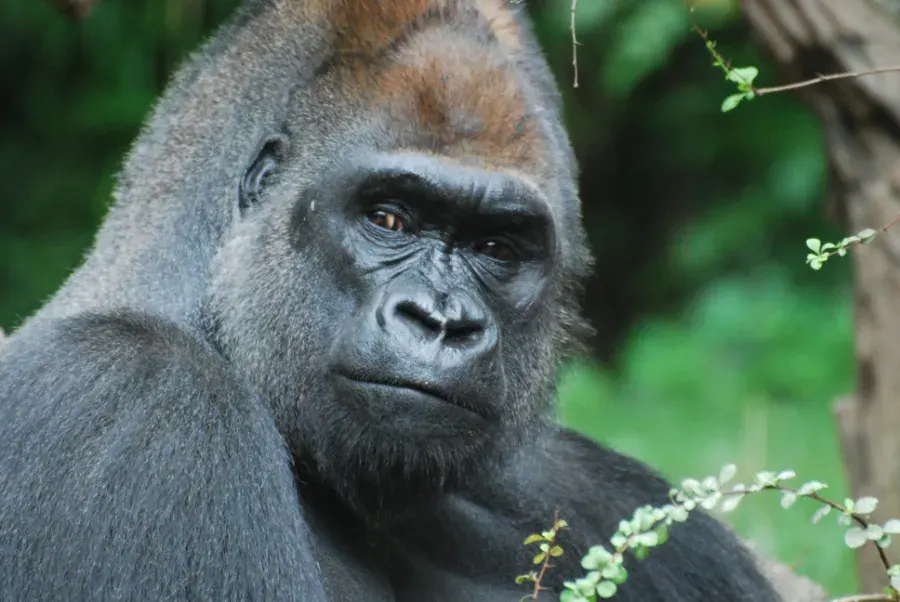
Gorillas are the largest living primates, powerfully built ground-dwelling apes native to the forests of equatorial Africa. Despite an imposing frame and a dominant male’s deep chest-beating display, gorillas are gentle, mostly herbivorous animals that live in close-knit family groups led by a mature "silverback" male.
Classification
Kingdom: Animalia
Phylum: Chordata
Class: Mammalia
Order: Primates
Family: Hominidae
Genus: Gorilla
Species: 2 — western gorilla (G. gorilla) & eastern gorilla (G. beringei)
Subspecies: 4, incl. mountain gorilla & Grauer’s gorilla
Nearest relatives: Chimpanzees, bonobos and humans
Size
4–6 ft standing height (rarely upright for long); arm span up to 8.5 ft. Males are roughly twice the size of females.
Weight
300–485 lbs for wild males; females 150–250 lbs. Captive males can exceed 500 lbs.
Habitat
Lowland tropical rainforest (western gorilla) and montane/bamboo forest up to 13,000 ft elevation (mountain gorilla, a subspecies of eastern gorilla).
Description
A stocky, muscular body, long arms used for knuckle-walking, a pronounced sagittal crest on the skull, and a saddle of silver-grey hair on mature males — the "silverback."
Diet
Almost entirely herbivorous — leaves, shoots, stems, bark and fruit, occasionally insects. An adult male can eat 40–50 lbs of vegetation a day.
Intelligence
Among the most cognitively sophisticated non-human animals, capable of tool use, learning sign language (as demonstrated by Koko) and self-recognition in mirrors.
Communication
More than 25 distinct vocalizations, plus chest-beating, body posture and facial expression; chest-beating signals excitement or a challenge, not necessarily aggression.
Gestation
About 8.5–9 months, very close to human gestation.
Birth & Litter Size
A single infant, weighing about 4 lbs, clinging to its mother’s belly then back for the first several years.
Sexually Mature
6–8 years for females, 10–12 years for males, though males rarely lead a group before 15.
Life Span
35–40 years in the wild, up to 50+ in captivity.
Social Structure
Troops of 5–30 individuals led by one dominant silverback male, who makes group decisions on movement, feeding and defense and mediates conflicts.
Did You Know?
Gorillas share roughly 98% of their DNA with humans, making them one of our closest living relatives after chimpanzees and bonobos.
Did You Know?
A gorilla builds a fresh nest of bent and folded branches every single night — on the ground for adults, in trees for youngsters — and never reuses one.
Did You Know?
Chest-beating is not primarily a threat display. It usually signals excitement, invites play, or communicates the silverback’s location to the rest of the troop over the dense noise of a rainforest.
Gorilla in Foreign Languages
Frenchgorille
GermanGorilla
Italiangorilla
Portuguesegorila
Spanishgorila
Russiangorílla
Polishgoryl
Swahilisokwe mtu
Lingalangila
Kinyarwandaingagi
Arabicghurilla
Hindigorilla
Japanesegorira
Mandarindàxīngxīng
Koreangorilla
Greekgorílas
Turkishgoril
Dutchgorilla
Zuluingorila
Ancient Greekgorillai