Mammals · Hippopotamids
Hippopotamus
Hippopotamus amphibius
Vulnerable
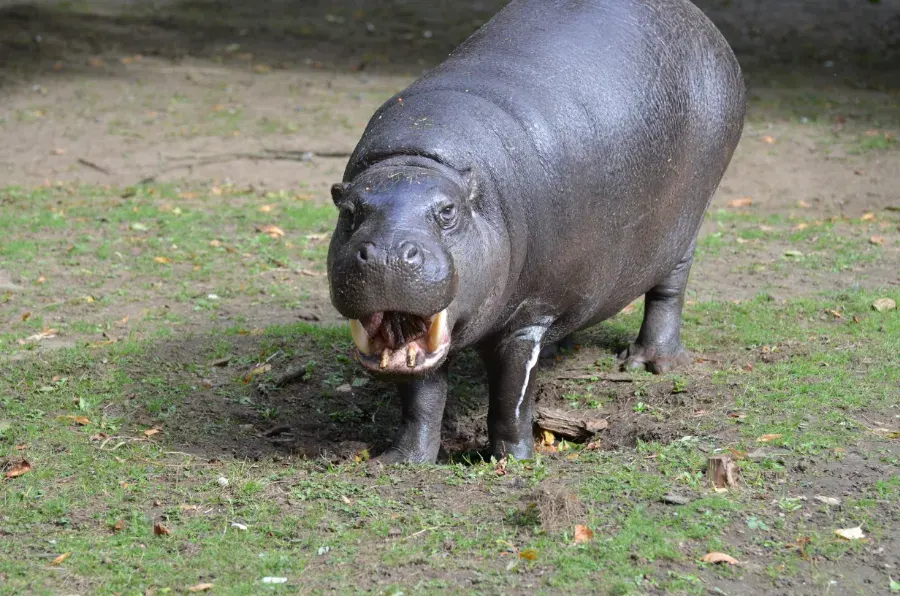
The hippopotamus is a massive, barrel-shaped semi-aquatic mammal that spends most of daylight submerged in African rivers and lakes, emerging at night to graze on land. Despite a docile, almost comical reputation, it is among the most dangerous large animals in Africa, fiercely territorial in water and capable of outrunning a person on land.
Classification
Kingdom: Animalia
Phylum: Chordata
Class: Mammalia
Order: Artiodactyla
Family: Hippopotamidae
Genus: Hippopotamus
Species: amphibius
Nearest relative: Whales — hippos are the closest living land relative of cetaceans
Living relative: The pygmy hippo (Choeropsis liberiensis), a separate, much smaller species
Size
10–16.5 ft long, 5 ft at the shoulder; 3,300–9,900 lbs. Males are considerably larger than females.
Habitat
Rivers, lakes and swamps across sub-Saharan Africa, spending most daylight hours submerged in water.
Description
A massive, barrel-shaped body on short legs, with thick, nearly hairless grey-brown skin that secretes a natural reddish "blood sweat" sunscreen.
Diet
Herbivore — grazes 80–100 lbs of grass a night on land; rarely eats aquatic plants.
Speed
Up to 19 mph on land over short distances despite its bulk — faster than a human can run.
Bite force
One of the strongest bites of any land mammal, with canine tusks up to 20 inches long used in fights, not feeding.
Communication
Deep grunts, honks and bellows that carry underwater and through the air alike.
Gestation
About 8 months.
Birth & Litter Size
A single calf, often born underwater, weighing 55–120 lbs and able to swim before it can walk on land.
Sexually Mature
7–15 years for males, 5–6 years for females.
Life Span
40–50 years in the wild.
Social Structure
Gathers in groups of 10–30 called pods or bloats in water, led by a dominant bull; largely solitary while grazing on land at night.
Did You Know?
A hippo’s "blood sweat" is neither blood nor sweat. It is a reddish, oily secretion that acts as a natural sunscreen and antiseptic, produced from special skin glands.
Did You Know?
Hippos are considered the closest living land relative of whales and dolphins, sharing a common ancestor that lived around 55 million years ago.
Did You Know?
Hippos are responsible for more human deaths in Africa than lions, leopards, elephants and buffalo combined, largely from surprise encounters with boats or people walking near the water at night.
Hippo in Foreign Languages
Frenchhippopotame
GermanNilpferd
Italianippopotamo
Portuguesehipopótamo
Spanishhipopótamo
Russiangippopotám
Polishhipopotam
Swahilikiboko
Zuluimvubu
Afrikaansseekoei
Arabicfaras al-nahr
Hindidaryaee ghoda
Japanesekaba
Mandarinhémǎ
Koreanha-ma
Greekippopótamos
Turkishsuaygırı
Dutchnijlpaard
Amharicgemasa
Lingalangubu